How the H-1B Program Is Costing Minnesotans Their Jobs, Their Homes, and Their Future
By Tyler Bass | Bass for Congress | Vote August 11th — Republican Primary
I live in Minnetonka.
I want to start there because this issue isn’t abstract to me — it’s something I see with my own eyes, in my own neighborhood, every single day.
Minnetonka has changed dramatically in the years I’ve lived there. A substantial portion of my community — I’d estimate somewhere around 60 percent of my immediate neighbors — has roots in India. And I want to be very clear about something before I write another word: these are good people. Friendly, hardworking, family-oriented people who I’ve spoken to directly, whose kids play in the same neighborhoods as everyone else’s kids, and who came to Minnesota to build a better life just like everyone else who has ever come to this state.
I am not writing this blog to attack them. I am writing this blog to ask a serious, uncomfortable question that nobody in the political class wants to ask out loud:
Why has our federal visa system been designed in a way that puts American workers second — and what is it costing the rest of us?
Because here’s what those neighbors have told me directly, in their own words, during real conversations: they are here on visa programs. Many of them are engineers — highly educated, technically skilled professionals working at places like Medtronic, Optum, and Target right here in the Twin Cities. And at the same time, many of them have also shared that they are receiving some form of government assistance — food programs, housing assistance, and other state benefits.
Now, I’m not going to make claims I can’t back up about every individual case or program. What I can tell you is what I’ve heard from my own neighbors, and what I’ve seen in my own community. And what I’ve seen raises a very legitimate policy question: when the federal government admits tens of thousands of skilled foreign workers into this country under temporary work visas, and Minnesota’s state programs extend benefits to legal residents regardless of visa status, who is ultimately footing the bill? And why are we doing it when there are hundreds of thousands of Minnesotans who want those jobs and can’t get them?
That is not a hateful question. That is the only honest question a representative of this district should be asking.
The Visa Maze: 180 Types and Counting
Let’s start with the scale of the problem, because most Americans — and even most politicians — have no idea how large and complicated the federal visa system has become.
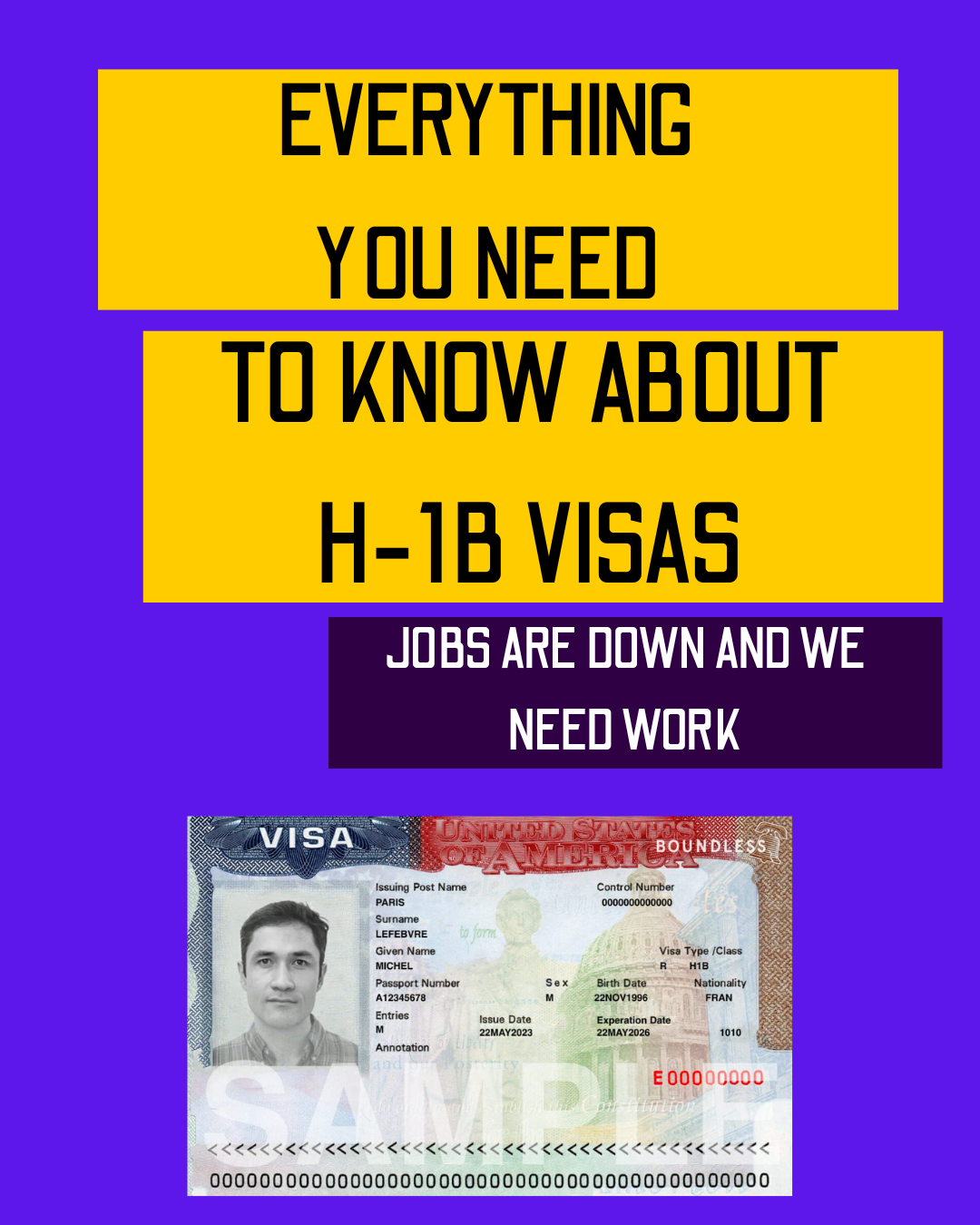
There are currently over 180 different categories of visas a person can apply for to come to or remain in the United States. Student visas. Tourist visas. Religious worker visas. Specialty occupation visas. Exchange visitor visas. Treaty trader visas. Intracompany transfer visas. Fiancé visas. Agricultural worker visas. The list is staggering — and within each of those categories are sub-categories, extensions, adjustments of status, and pathways that have been layered on top of each other over decades of congressional dealmaking, lobbyist influence, and bureaucratic mission creep.
The result is a system so complex that even immigration lawyers spend entire careers mastering just a few corners of it. And in that complexity, employers — especially large corporations and the consulting firms that serve them — have found enormous opportunity to do something the program was never supposed to allow: replace American workers with cheaper foreign ones, legally and systematically.
The H-1B visa is the most prominent example, but it is far from the only one.
What the H-1B Program Was Supposed to Be — and What It Became
The H-1B visa was created with a simple premise: when an American employer needs a highly specialized worker and genuinely cannot find one domestically, they can bring in a foreign worker on a temporary basis to fill that gap.
That sounds reasonable. In limited, genuinely specialized circumstances, it probably is.
But that is not what the program became.
The number of foreign workers newly employed in Minnesota under the H-1B program has nearly doubled in the past decade, with some of the state’s largest businesses relying on the skilled worker visas more than ever. They are working as software developers and engineers at such organizations as U.S. Bank, UnitedHealth Group’s Optum unit, Mayo Clinic, the University of Minnesota, and Medtronic.
Think about that. Software developers and engineers. These are not obscure, impossibly specialized roles. Minnesota has some of the finest universities in the country — the University of Minnesota, Minnesota State, private colleges across the metro — graduating thousands of software engineers and technical professionals every single year. These are American kids who took on student loan debt to get those degrees and are ready to work. And they are being passed over in favor of visa holders who come at a lower cost and with fewer protections.
Mayo Clinic received the most H-1B visas among employers in the state in fiscal 2024, followed by the University of Minnesota. Mayo’s approvals increased by 65 percent from 2020 through 2024. Mayo Clinic comprised roughly one-sixth of all of the state’s initial H-1B approvals during the Biden administration.
Meanwhile, Medtronic has hired a total of 2,407 H-1B visa employees across 35 locations, with the majority of hires in Minnesota. The primary jobs hired include software developers, industrial engineers, and biomedical engineers.
These are Minnesota’s flagship employers. They are profitable, well-funded, and deeply embedded in our community. And they are systematically choosing to fill technical roles with visa workers rather than the Minnesotans who live, pay taxes, and raise families right next door to their campuses.
The Wage Suppression Nobody Talks About
Here is the economic reality that the corporations and their lobbyists don’t want you to think about too carefully.
The H-1B program requires employers to pay visa workers the “prevailing wage” — a wage determined by the Department of Labor designed to ensure foreign workers aren’t paid below market rates. On paper, that sounds like a protection for American workers. In practice, as researchers, whistleblowers, and even the federal government itself have acknowledged, it has become a mechanism for suppressing wages across entire industries.
The H-1B statute requires that employers pay their H-1B workers no less than the actual wage paid to their similarly employed U.S. workers. But analysis of an internal corporate document released as part of a whistleblower lawsuit showed that large-scale illegal underpayment of H-1B workers is a core part of at least one major firm’s competitive strategy. Victims include not only the H-1B workers but also the U.S. workers who are either displaced or whose wages and working conditions degrade when employers are allowed to underpay skilled migrant workers with impunity.
Even when companies follow the letter of the law, the prevailing wage system is rigged. Existing prevailing wage levels have, for too long, been set dramatically below the market rates which many American workers receive, particularly entry-level Americans and recent college graduates in science, technology, engineering, and math fields.
The Department of Labor itself admitted this in a formal rulemaking, noting the system needs to be modernized to bring foreign worker wages in line with what American workers actually earn. That’s not a fringe claim — that is the federal government confirming what American workers have been saying for years.
And President Trump has called it exactly what it is. Trump issued a proclamation stating that the H-1B visa program was being “deliberately exploited to replace, rather than supplement, American workers with lower-paid, lower-skilled labor,” and that this abuse has been used by companies to “artificially suppress wages, resulting in a disadvantageous labor market for American citizens.”
That’s not rhetoric. That is the documented reality of how the program operates — and it has been operating this way in Minnesota for years.
The Hidden Machinery: How Corporations Use Middlemen to Cover Their Tracks
One of the most frustrating aspects of this system is how deliberately obscured it is from public view.
Many employers hire visa workers using middlemen companies or “outsourcing” firms. By going through outsourcing firms, U.S. companies pay less and may avoid some of the negative publicity they would get from openly replacing their seasoned American staff with cheaper foreign hires. American companies often use subcontractors, outsourcers, or third-party shell companies to employ H-1B workers, which obscures the total number they hire.
So when a major Twin Cities corporation posts a job listing and an American engineer applies and doesn’t get called back, they often have no way of knowing that the role was already pre-arranged to go to a visa worker placed through an outsourcing firm. The displacement is invisible. The suppression is invisible. But the impact on that American worker’s life — the rejected application, the career stalled, the family budget that doesn’t work — is very real.
In a federal class-action lawsuit, a major outsourcing company was found liable of intentionally discriminating against more than 2,000 non-Indian employees over nearly a decade. The judgment echoed a finding from an Equal Employment Opportunity Commission investigation centered on discrimination claims based on race and national origin. Three American workers sued the company alleging that it used various ruses to fire American workers so they could be replaced by lower-paid Indian workers.
This is not a hypothetical concern. These are court-documented patterns playing out in the very industries — tech, engineering, healthcare IT — that Minnesota’s economy depends on.
What I’ve Seen in Minnetonka: A Community-Level View
Let me come back to what I’ve personally witnessed, because I think it illustrates the policy failure in concrete human terms.
I have neighbors who are highly educated engineers working at major Twin Cities employers. They are here on various visa programs. I have spoken to them directly. And in those conversations, several of them have told me that they are also receiving various forms of government assistance — food benefits, housing assistance, programs funded by Minnesota taxpayers.
Now — I want to be careful here, because the legal reality is complex. Standard H-1B visa holders are generally not eligible for federally funded SNAP food stamps. However, Minnesota has extended state-funded food assistance programs to certain non-citizens, and five states including Minnesota have offered public or private health coverage with state subsidies to all otherwise eligible immigrants regardless of their immigration status.
What that means in plain English is this: Minnesota, under Democrat leadership, has deliberately chosen to extend state-funded benefit programs to visa holders and non-citizen residents in ways that go well beyond what federal law requires. We have made our state more generous to foreign nationals — including people here on temporary work visas — at direct cost to the Minnesota taxpayer.
I’m not saying those individuals are doing anything illegal. Many of them are doing exactly what the system allows. What I am saying is that the system itself is broken — and Minnesota Democrats have made it more broken by expanding state benefits to people who are here, by definition, on a temporary basis.
When an engineer working at Medtronic on an H-1B visa is also receiving Minnesota state housing assistance or food benefits, something has gone fundamentally wrong with how we’ve designed and implemented these programs. American workers — Minnesotans who have lived here their entire lives, who have paid into the system their entire careers — should not be watching their tax dollars support a benefit structure that also covers foreign nationals on corporate work visas.
That is not a xenophobic observation. That is a reasonable demand for fiscal common sense.
The Paid Family Leave Burden: A State Mandate That’s Crushing Small Business
I want to take a moment to address the Minnesota Paid Family and Medical Leave program, because it is directly related to this conversation — and because as a small business owner, I feel its impact personally.
The new, historic paid leave mandate forces employers to offer 12 weeks of paid medical leave and 12 weeks of paid family leave, maxing out at 20 weeks total in a 52-week period. The program is administered by a new state agency with over 400 full-time employees and is paid for through surplus funds and a considerable increase in payroll taxes.
The program launched in January 2026 with a 0.88 percent payroll tax — 25 percent higher than what was originally proposed when the Legislature passed the law in 2023. The state allocated $668 million from the general fund as seed money so employees could access benefits as soon as they begin paying taxes for them, and kicked in an additional $128 million for startup costs.
Let me put that in plain terms: the Democrats in the Minnesota Legislature took over $796 million in taxpayer money to front-load a brand-new government benefit program. Before a single claim was paid, nearly $800 million of your money was already committed. And the payroll tax — split between employers and employees — has already been revised upward by 25 percent before the program completed its first full year.
The actuarial firm Milliman advised the state that the rate needed to be increased to 0.88 percent to ensure the program is adequately funded, and the law states that DEED cannot raise the payroll tax above 1.2 percent.
That ceiling will be tested. Government programs don’t get cheaper over time. They expand. The administrative apparatus grows. The eligibility gets broadened. The costs climb. And the small business owners — the contractors, the restaurant operators, the fitness studios, the trade shops — end up paying more and more into a system they had no say in creating.
Here is where the H-1B issue connects directly: when a large corporation employs thousands of visa holders who then take advantage of the full 20 weeks of paid family leave — and that corporation can absorb the disruption because it has resources to backfill roles — that cost still flows through the payroll tax system back to every employer in the state, including the small business owner with five employees who has to scramble every time someone takes an extended leave.
I want to be clear: I am running for federal office, not state office. The paid family leave program is a state mandate and falls outside my direct jurisdiction in Congress. If I were running for a state office, I would advocate to repeal or dramatically reform this program because it is a textbook example of a socialist-style government mandate that forces private employers to fund government social programs through payroll taxation — and it is directly hurting the small businesses that are the backbone of Minnesota’s economy.
What I can do at the federal level is fight against the expansion of federal mandates modeled on programs like this, push back against federal policies that make it easier for states to extend benefit programs to non-citizen visa holders, and work to reform the H-1B system so that the corporations driving this demand aren’t off-loading costs onto small businesses and taxpayers while pocketing the wage savings themselves.
The Housing Connection: Your Rent Is Going Up Because of Visa-Driven Demand
I’ve written separately about how Minnesota rents have increased 111 percent since 2013. I want to connect that directly to the visa and immigration demand picture, because they are not separate issues.
According to a report from the U.S. Department of Housing and Urban Development, a sharp rise in immigration during the Biden administration played a measurable role in pushing housing demand higher. Between 2021 and 2024, the foreign-born population in the U.S. increased by roughly six million people — the largest population spike over such a short period in American history. HUD estimates that immigration accounted for up to 100 percent of housing demand growth in some regions, and roughly two-thirds of total rental demand growth nationally.
H-1B visa holders are buying thousands of U.S. homes each year, reshaping housing supply, prices, and rental demand. Indian nationals, many of whom work in tech and are on H-1B visas, purchased about 4,700 homes in 2024-25, spending roughly $2.2 billion. While that may sound like a small share of the overall market, the demand is concentrated in a handful of job hubs, and that concentration can move prices.
Minnesota is one of those job hubs. The Minneapolis-Saint Paul metro area contains the vast majority of Minnesota’s H-1B sponsoring employers, particularly in Minneapolis, Saint Paul, Minnetonka, and Eden Prairie.
Minnetonka. Eden Prairie. The very neighborhoods where I live and where I’ve had these conversations with my neighbors. These are among the most concentrated H-1B employment zones in the state. And those workers — many of them earning reasonable salaries, many of them with families — need places to live. They are competing in the same housing market as the Minnesotan who grew up here, who works in the trades, who earns $25 an hour and is trying to rent a decent apartment or save for a first home.
When demand goes up and supply doesn’t keep pace, prices go up. That is basic economics. And when the federal government is pumping thousands of additional workers into a concentrated metro housing market year after year through visa programs, they are directly contributing to the housing cost crisis that is crushing ordinary Minnesotans.
The politicians who expanded these visa programs and the corporations that lobbied for them don’t live in the apartments where the rent went from $850 to $2,000. They don’t have to choose between groceries and rent. They don’t have to explain to their adult children why they can’t afford to move out.
The rest of us do.
The Health Insurance Premium Nobody Is Talking About
There’s one more piece of this puzzle that deserves attention, and it’s one that affects every Minnesotan who buys their own health insurance or relies on employer-sponsored coverage.
When you dramatically expand the pool of people covered under health programs — whether through visa holder eligibility for state-subsidized coverage, through family members of visa workers entering the system, or through any other mechanism that adds people to insurance risk pools — you increase the cost of coverage for everyone already in those pools.
Minnesota has offered public or private health coverage with state subsidies to all otherwise eligible immigrants regardless of their immigration status, though due to state budget constraints, Minnesota has ended or will pause new enrollment for some immigrant populations.
So Minnesota taxpayers funded a state health subsidy program expansive enough that even the state itself had to pause new enrollment because it couldn’t afford the cost. That is not a success story. That is a government program that expanded faster than the taxpayers’ ability to fund it — and the people who paid for the overrun are the working Minnesotans whose premiums have climbed year after year.
Small business owners know this intimately. Every year, the health insurance renewal comes. Every year, the premium is higher. Every year, the explanation involves “increased utilization” and “rising claims costs” — which is insurance-industry language for: more people using the system, driving up costs for everyone.
The Common-Sense Solution: A 1099 Model That Actually Works
Here’s where I want to offer something different from the typical political answer, because I’m a businessman and I think like one.
The conversation in Washington about the H-1B program is usually framed as a binary: either you support the program as-is and claim you’re pro-business and pro-innovation, or you want to eliminate it entirely and get accused of being anti-immigration.
That is a false choice. There is a third option that makes far more sense and that would address the core complaints from both American workers and from the employers who genuinely do need specialized skills from time to time.
Outsource what you must. Contract what you can. But don’t bring foreign workers onto the American benefits system.
We used to do this far more commonly and far more sensibly. If an American company needs a specialized engineer for a specific project — a particular software architecture, a niche biomedical device component, a specialized manufacturing process — and genuinely cannot find that skill domestically, hire the foreign expert as an independent contractor on a 1099 basis. Bring them in for the project. Pay them directly for their skills. When the project is done, their engagement ends.
What does this accomplish? It separates genuine specialized need from systematic workforce replacement. Under a 1099 model, the foreign contractor is not placed on the company’s health insurance plan. They are not eligible for state benefit programs tied to employment. They are not competing for housing in Minnesota’s long-term market the same way a permanent employee would. They are not in a position where their employer can leverage their visa dependency to suppress their wages and by extension suppress wages for American workers doing comparable work.
This is how outsourcing used to work before large corporations discovered that the H-1B program gave them a way to import permanent, dependent, below-market-rate workforces instead of simply contracting for specialized expertise on a project basis.
The reform is straightforward: mandate that any foreign worker brought in for a specialty role be classified as an independent contractor, not as a full-time employee eligible for benefits and long-term residence. Require rigorous documentation that the role cannot be filled domestically. Set the contract to a defined project term. And make clear to employers that using foreign contractors to systematically replace American full-time employees — rather than genuinely supplement specialized gaps — will result in serious legal and financial consequences.
Americans First. Always.
Let me be direct about where I stand on the fundamental principle, because I think it gets lost in the complexity of the policy debate.
American citizens and legal permanent residents should be first in line for American jobs. Period.
Not second. Not equal. First.
When a company in Minnesota posts a job opening, the first consideration should be: can a Minnesotan do this job? If the answer is yes — and in most cases, with appropriate training and fair compensation, it is yes — then a Minnesotan should get that job. Full stop.
The H-1B program was sold to the American public on the premise that it would only be used when no American worker was available. That premise was a lie. The program was deliberately designed, as researchers and advocates have documented for decades, to make it easy for corporations to prefer foreign workers over American ones when it served their financial interests to do so. The result is a generation of American engineers, programmers, and technical professionals who have been systematically passed over, undercut, and in many cases pushed out of their fields entirely.
I want that to stop. And if elected to represent CD3 in Congress, I will fight for exactly that.
Specifically, I will push for:
A dramatic reduction in H-1B cap numbers until we can verify that the program is being used as originally intended — to fill genuine, documented gaps — rather than as a mechanism for systematic workforce replacement.
Elimination of the outsourcing loophole that allows corporations to use third-party staffing firms to deploy H-1B workers without full transparency about where they’re placed or what they’re paid.
Strict enforcement of “Americans first” hiring documentation — meaning employers must demonstrate, with specifics, that they made genuine good-faith efforts to hire American workers before going to the H-1B pipeline.
A 1099 contractor framework for legitimate specialized foreign expertise, which removes the benefits dependency and long-term employment relationship that currently creates incentives for wage suppression and workforce displacement.
Consolidation of the visa system from 180+ categories down to a manageable, enforceable structure where every category has a clear purpose, clear limits, and clear accountability.
What Democrats Want — And Why It Doesn’t Work
Every time this conversation happens, the Democrats offer the same answer: more programs, more benefits, more government intervention to help people who’ve been left behind by the broken system.
But here’s the problem with that answer: the broken system is largely their creation.
The expansion of H-1B program usage during the Biden years. The extension of state benefit programs to non-citizen visa holders. The paid family leave mandate that cost nearly $800 million in seed funding before a single benefit was paid. The housing policies that failed to build enough supply while demand skyrocketed. The failure to enforce existing visa program rules that were supposed to protect American workers.
Democrats built this system. Democrats expanded this system. And their answer to the damage it’s caused is to build more government on top of it.
I reject that entirely.
I believe in markets that actually work — where employers compete fairly for American workers by paying competitive wages, where housing is affordable because supply meets demand, where health insurance premiums don’t spiral because the risk pools are managed responsibly. Government doesn’t create those conditions by adding programs. It creates them by getting out of the way of the economic forces that make them possible naturally.
The visa system needs to be cut down to size. The programs that extend taxpayer-funded benefits beyond what fiscal responsibility demands need to be reformed. The corporations that have used the H-1B program to systematically undercut American workers need to be held accountable.
That is not isolationism. That is not anti-immigration. That is common sense governance on behalf of the people who actually live, work, vote, and pay taxes in this district.
A Final Word to My Minnetonka Neighbors
I want to close by coming back to where I started: my neighborhood.
To the Indian engineers and families who live near me, who have spoken to me honestly about their situations and their lives — I hold no ill will toward you. You came to Minnesota because the system invited you here. Many of you are contributing to this community in real ways. Many of your children will grow up to be Minnesotans in every meaningful sense.
My argument is not with you. My argument is with the corporations that designed a system to exploit your visa dependency to suppress wages. My argument is with the politicians who expanded benefit programs faster than the taxpayers could fund them. My argument is with a federal visa regime so bloated and complex that it serves everyone’s interests except American workers.
When the system is fixed — when American workers are genuinely put first, when visa programs are used for genuine gaps rather than systematic replacement, when benefit programs are calibrated to what taxpayers can actually sustain — the result will be better for everyone. American workers will earn more. Visa workers will be treated more fairly and less exploitatively. Taxpayers will have programs that are sustainable and accountable.
That is what I am fighting for.
And on August 11th, I’m asking you to join me.
Vote Bass for Congress — August 11th Republican Primary.