Where I Stand on the Second Amendment
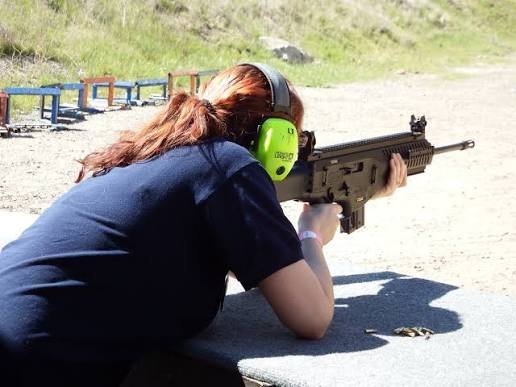
I grew up in the Boy Scouts, and that’s where I was first taught gun safety. I’ve been a responsible gun owner ever since. I have my permit to carry, and I go to the range. When I talk about the Second Amendment, I’m talking about something I’ve lived my whole adult life.
I also want to say something first, because it matters. The shooting at Annunciation Church and School last August took the lives of two children, 8-year-old Fletcher Merkel and 10-year-old Harper Moyski, and injured 21 others. Nobody in this district wants to see that happen again. How we prevent it is what we need to get right.
What my opponent is promising
At a town hall in Plymouth last September, Congresswoman Kelly Morrison said she supports reinstating the federal ban on semi-automatic weapons and high-capacity magazines that expired in 2004, and that she plans to co-sponsor a federal red flag law. [Link to Star Tribune article]
Words matter in this debate, and they’re often used loosely, so let me explain what these terms actually mean.
What “assault rifle” and “semi-automatic” actually mean
An assault rifle is a military rifle that can fire automatically. The term describes a rifle that is selective-fire, meaning it can fire fully automatic or in bursts, and that uses an intermediate-power cartridge. Those guns have been tightly regulated since the National Firearms Act of 1934, and since 1986 no new fully automatic weapons can be made for civilian sale.
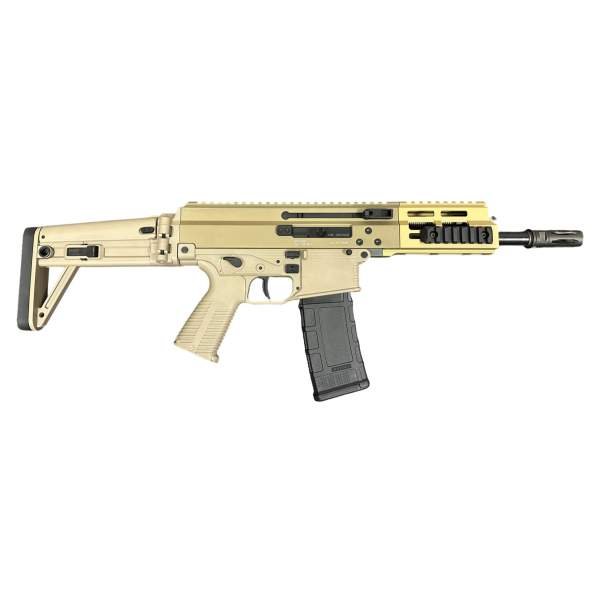
The AR-15 is not an assault rifle. It fires one round per pull of the trigger. The “AR” stands for ArmaLite, the company that designed it. It doesn’t stand for “assault rifle.” The AR-10 is its larger predecessor, chambered in a heavier cartridge, and it’s popular with hunters for big game. Both are rifles. Neither is an assault rifle.
“Assault weapon” is a political label, not a technical one. The ban that expired in 2004 defined it with a list of named models plus a set of features, such as a pistol grip, folding stock, or flash suppressor. So whether a rifle was legal could come down to how it was built and what it looked like, not how it worked.
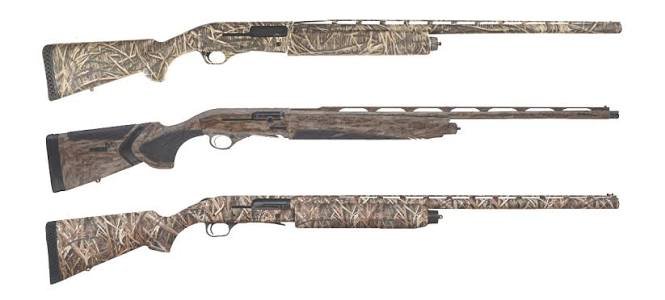
Semi-automatic just means one shot per trigger pull. That describes a huge range of firearms that have nothing to do with the guns people picture in the news:
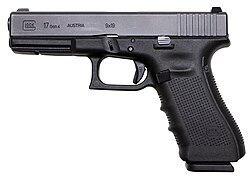
- Nearly every modern handgun that isn’t a revolver.
- Many hunting rifles, including plenty that look nothing like an AR-15.
- Semi-automatic shotguns, which are used for bird hunting, clay shooting, and home defense.
- Small-caliber rifles used for target practice and small-game hunting.
High-capacity magazines aren’t unique to the AR-15 either. Many rifles and handguns, including common full-size pistols, come from the factory with magazines holding more than ten rounds.
So when a politician says “ban semi-automatic weapons and high-capacity magazines,” it matters a great deal how the bill defines those terms. Depending on the wording, it could reach hunting rifles, shotguns, and the ordinary handguns that women buy to protect themselves. I’d like Congresswoman Morrison to answer a plain question: where exactly is your line, and which firearms does your bill cover? If it doesn’t touch those guns, put it in writing. Americans shouldn’t have to guess what they’ll still be allowed to own.
Real automatic weapons are already the hardest guns to get
If you want to own a true machine gun, the kind that fires continuously when you hold the trigger, the process is far tougher than buying an ordinary firearm.
It isn’t a regular permit. Under the National Firearms Act, you have to get approval from the ATF to transfer the weapon to you:
- You submit fingerprints and a photograph, and the ATF runs an extensive background check.
- Local law enforcement is notified of your application.
- You pay a federal tax and receive a tax stamp.
- You wait months for approval before you can take possession.
There’s also a hard limit on supply. Since 1986, no new machine guns can be made for civilians. Only ones that were registered before then can be bought and sold, so they’re scarce and often cost tens of thousands of dollars. Very few Americans own one, and every one of them has been through that federal process.
So when politicians talk about “assault weapons,” keep in mind that Congress and the ATF already put a much heavier standard on the guns that actually fire automatically. The semi-automatic rifles, shotguns, and handguns that law-abiding Americans own for hunting, sport, and self-defense are a different category. Treating them as the same thing blurs a line the law has drawn clearly for ninety years.
The right to defend yourself is protected by the Second Amendment, part of the Bill of Rights that our Constitution guarantees, and I stand with our Constitution.
What it takes to buy a gun in Minnesota
Politicians like to talk as if anyone can walk in and get a gun. That’s not how it works, and a lot of people don’t know what it actually takes. I’ve been through this process myself:
- Permit to purchase. You go to your local police station and fill out a form. This is a full background check on you. [Verify timing and which firearms require this permit.]
- Pick out your firearm. You go to a gun range or gun shop and find the pistol or rifle you want.
- Second background check. When you buy, the gun shop runs another background check.
- Pick it up. A few days later you come back for your gun, if you’re approved.
If you want a permit to carry, that’s another background check, plus a course with classroom instruction and time on the range.
So before a law-abiding Minnesotan can buy a handgun, they’ve gone through two background checks. Carrying one takes more checks, more training, and more practice. The system already asks a lot of responsible owners.
Fix the real problem: hold criminals accountable
When I was interviewing a man for a job with one of my businesses, I noticed a ten-year gap in his work history. I asked about it, and he told me he just wanted a break from work. So I ran a background check. He had about 20 convictions for stealing cars and robbing people of their belongings at gunpoint, and he had served time in prison for it. Even after all that, he was still able to buy ghost guns.
Think about that. He had been through the system again and again and kept coming back to the same crimes. He wasn’t stopped by a background check, because he never went through one. People like him don’t buy guns the way a law-abiding Minnesotan does. They get around the system entirely.
That’s the problem. The two background checks I went through don’t stop him. Only a sentence long enough to keep him off the street does.
What I want to fix is simple:
- Harsher sentences for repeat offenders who commit crimes with a weapon. If you’ve shown over and over that you’ll use a gun to hurt people and take what’s theirs, you shouldn’t be back on the street to do it again.
- No new restrictions on law-abiding gun owners. People who go through the permits, the background checks, and the training aren’t the ones causing the problem.
Let’s talk
Congresswoman Morrison said at her town hall that stories change hearts and minds more than data does. I think stories matter, and mine is one of a gun owner who has followed every rule and doesn’t think responsible Minnesotans should be punished for what criminals do. I’m happy to sit down with anyone in the 3rd District, including those who disagree with me.